
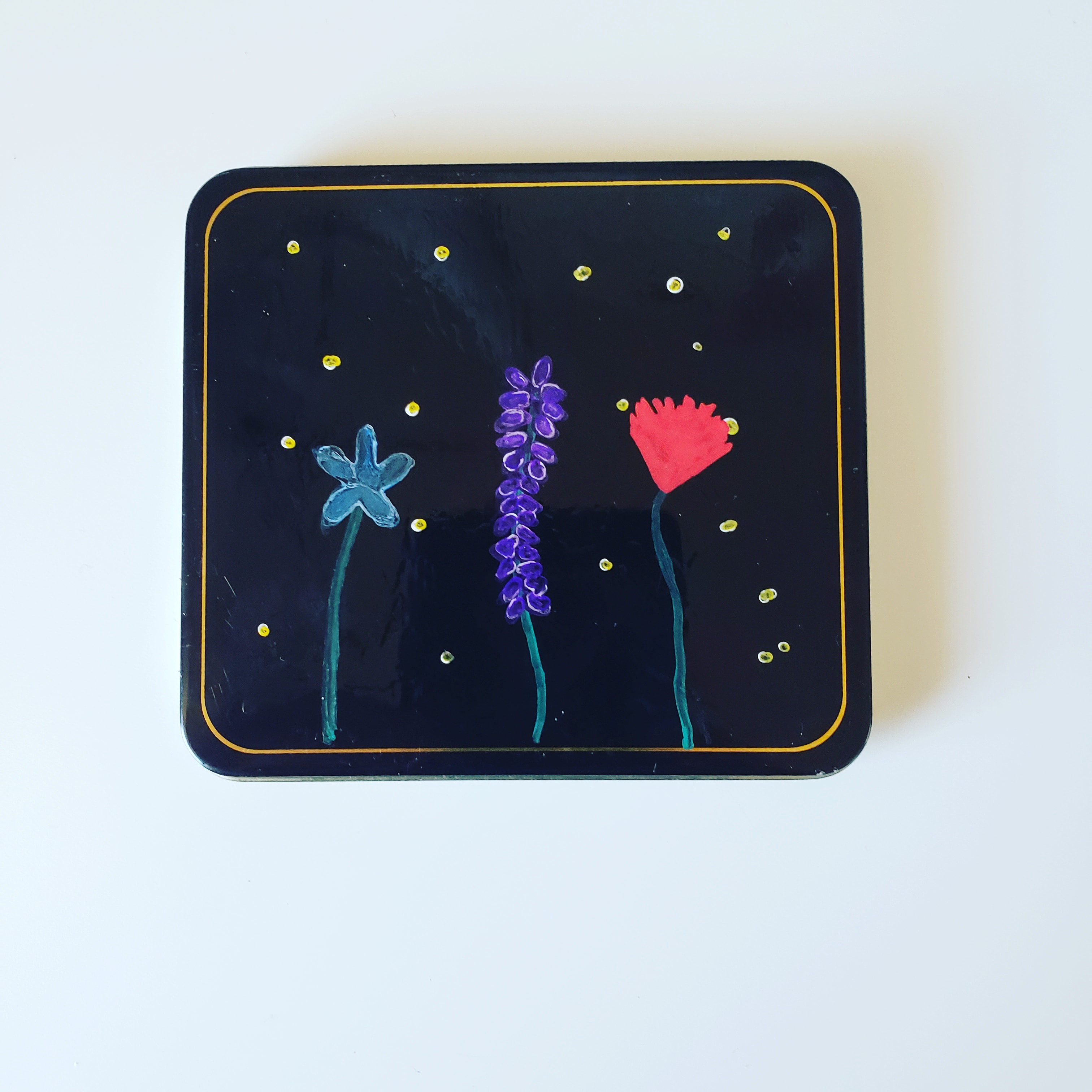
Bees fly but not far enough, flowers are blooming in Antarctica,
pearlwort, hair grass, lush in the near-always
frozen earth, red flags masquerading as profound beauty amid
the fickle icescape. Astronomers have become poets,
recently invented a word for the painful loss of dark skies: noctaglia,
meaning sky-grief, how light pollution rubs over
star faces and constellations, blurry like a rough palm pushed hard
into the eyes or 80’s television snow after hours,
sea turtles and shorebirds disoriented, citizens of big cities awake at 2am
despite masks and drawn blinds. When I was seven,
Mom pointed to the middle star in Orion’s belt and told us,
when I die, look there, that’s how you’ll find me.
Now it’s mid-February in the empty yard, insomnia a tall ghost
I can no longer blame on retrogrades or solar flares,
and though I’m madly in love with the idea of flowers thriving
in a continent with no bees, their tiny fertilities
rooting into glacier wall, I wonder how I’ll find anyone when
the time comes, the night sky a foreign text,
stars as untranslatable words, and all of us, despite eyes wide open,
sightless in the blinding dark.

Ashley Steineger is a holistic psychologist and poetry therapist who believes poetry is the language of healing. She is the author of The Poetry Therapy Workbook, and her poetry has appeared in The Night Heron Barks, Apricity Press, The Lumiere Review, and Palette Poetry, among others. Ashley lives and writes out of Raleigh, NC, where she enjoys forest bathing, collecting tattoos, and untranslatable words.
Image: “Miriam Cigarillo 2009” by Daniel Nester

 Pine Hills Review