
I arrive late to camp to find only a handful of tents. Everyone’s asleep at nine, also known as hiker’s midnight, drained from a long hot day. Next morning, I break my tent down before first light to get an early start and avoid the heat. A woman in her 20s with black hair and the gently wasted away look of thru hiker is also up. We pack up silently in the dark. We walk a few yards apart for most of the morning. Eventually we chat about the day and trail, and later the copperhead I almost step on. Her name’s Evelyn. We hike together for a week through pines, granite and blue skies. We talk non-stop. Alternating memoir, first date and confession. After a week, we walk into town and get a room so, she says, to not spoil the “sanctity of the trail.”
“You know, this will ruin everything,” she says as she holds up our room card.
But we walk together the next morning and for weeks after. We stop checking our phones, or meeting new trail friends. We have sealed our borders. We are alone together.
The weather turns cold and the trail snowy. We fly east where I have friends with a warehouse building and free rooms. We camp there. We’ll live out of our trail packs, use little and spend less. We’ll work jobs to earn enough to go back out west in the spring. We hibernate.
Evelyn works a graveyard. Most nights she’s home by four am because they run out of work and they put her in a car. I’m asleep when she gets home. She pours herself bourbon in a Mason jar and sits at the kitchen table. She eats a supermarket donut, or two, and plays with Lizzie, the gray mutt who adopted us and is our only luxury. I sleep through all this.
Evelyn likes to listen to break-up songs then. Break-ups are the only tool, she says, to uncover love. Chipping away at what you don’t want. Like sculpting marble to find the lover underneath.
At that hour, Evelyn is still in business clothes. Where she works everyone looks like they arrived wrapped in a twelve pack. Evelyn wears a gray skirt, a white blouse with wide lapels. Her hair is up and tight. Deeply asleep, I hear a purr of “your girl is home.” Evelyn’s been up all night. She’s had a bourbon or two and listened to her playlist of broken love. I quickly disembark my dreaming.
I watch Evelyn undress, uncareful about her clothes. If she folds her blouse to get another work day out of it, it reminds us both of work. Evelyn is perfect in that moment. Her skin has blue pink tones. Her body has the sloppy raw glow marked only by redness where underwear imprisoned her seconds before. Her eyes watch me while she undresses. I take turns watching her and feeling the thrill of her gaze until she is at last naked. I want to hold this moment but it’s like stopping rain.
This morning, Evelyn slides into bed still in her work clothes. I wake, the lights are on. Evelyn stares with a buzzed smile inches from my face. The dog to my left mimics her stare.
“Hey,” she says. “Look. OK. Look. OK. I messed up. Yeah. I kinda messed around at work with a para. Sorry.” She frowns and waits for me to say something while I wonder what I just heard. Then she repeats, “We fooled around. A bit.” I’m confused.
“What? Where was this?” I don’t know why I ask this.
“In the big conference room at work. The one with the view,” she explains.
All I can think of to say is, “OK.” She stands up, stripping off her blouse, bra and skirt. Today she folds them and goes to take a shower.
This is a moment that culture should prepare me for. It’s in all the movies, plays and songs. In an opera, I’d have an aria. But on the screen, stage or page it’s all yelling, ugly crying and an archeology of grievance. What if I don’t feel that? I know I can’t go back to sleep. I pull myself out of bed to ask a question.
“Do you have feelings for this person?” I ask through the shower curtain.
“Doubt it,” she says and laughs over the sound of the running water.
Evelyn falls asleep. She’s a light sleeper. She was always our bear alarm on the trail. Mornings I think of ways to be completely silent. I turn nothing on. I drink coffee from the day before. I skate around the wooden floors silently in wool socks. I walk Lizzie to keep her quiet, wincing as the lock clicks when we leave. I love my silent retreat each day before work. I work in the art department for a free newspaper used most often as an emergency umbrella against sudden rain for the unprepared. Days are long and we are staffed to fail. The week before, through habitual inattention at work, I paste an expired full-page Thanksgiving ad into a late January paper which goes to press. The publisher tells me he would have fired me if anyone else would do my job.
I decide maybe it’s OK. Maybe I’m not upset. Maybe it’s no big deal. Maybe this is what happens. A straying. A stepping out. I tell Evelyn that night before she goes to work that it’s OK. Evelyn looks confused and asks me why I don’t care. I tell her I do, but I don’t see the point in anger. Maybe I’m bloodless.
I want to know how to forgive Evelyn and move on. I seek advice from Sophie the office manager who writes our advice column. She tells us she’s an empath because she says has an extra pint of blood in her veins. Her hands are very warm. But how to ask her discreetly in our small open plan office?
Sophie finds me in a corner pounding our moody and recalcitrant copier. Sophie asks, “Everything OK?” and I tell her. She frowns. Sophie says, “So why did she do it?“ I tell her I don’t know. Maybe I won’t ever understand. My friend Lauren read The Fountainhead. She told her boyfriend it changed her life and she was leaving him. He read the book twice, but he never understood. “It’s not like Ayn Rand mentions me,” he tells me.
Two nights later, Lizzie’s wet dog breath on my face wakes me. The lights are on and Evelyn’s break-up playlist blares. She is packing her backpack. I ask her what’s going on. She says, “It happened again.” I sit up in bed. It feels like it’s the end. I tell her not to go. I tell her if we stay together, she can have the room and Lizzie. Evelyn says that shows I don’t care about anything.
That night I borrow a suit, white shirt and a tie, a look that sets me apart from the flurries of half-dressed giddy people out at two am in Times Square. Evelyn works at one of the old art deco buildings on Broadway. A solitary security guard sits at a desk with a loud heater blowing hard at his feet. I shout over the sound of the heater the place where Evelyn works and tell him that “their service sent me.” He calls up but as I expect and hoped no one answers at that hour. I tell him it’s urgent and he waves me in.
On the fifth floor the doors are locked. I wait until a man my age walks past the locked glass lobby doors. I knock. He has an aggressive smile. He lets me in and doesn’t ask any questions. Attractive people might be too trusting. I know bad things can happen to them. I just don’t know if they believe they can.
I walk the empty halls until I find Evelyn in the conference room alone at a laptop. The room does have an amazing view. The lighting is unnaturally bright, but comes from outside the room. We are level with giant white-hot screens on Broadway advertising shows and an endless parade of creams and scents. Broadway gives off a dystopian background rumble of traffic like if we are traveling in a spacecraft.
Evelyn looks at me coolly. “And why are you here?”
“I heard about the view,” I tell her.
At this, the man with the smile pokes his head in.
“Everything alright here?”
Of course. That’s him.
“Yes. Go,” she says. “All fine.”
He smiles his annoying smile and leaves. He doesn’t want to be involved. Which is a tell.
The view through the floor to ceiling windows of Times Square is immersive. The billboards of award-winning musicals and forty foot beauties selling beauty flash and flicker but are only visible in part. They give off a white misty dazzle. There is snow on the buildings and the bright light makes it seem like I’m looking at summer light in a canyon out west.
“The view’s insane. Like you said,” I say looking out, my back to Evelyn.
I feel Evelyn standing behind me. Her warm coffee breath on my neck. She puts her arms around my waist and I feel her hips. I turn to face her. She’s lit by the street. Her face has a marquee quality as her skin warms in the light. Her breathing is ragged. I understand the room, and the boy with the smile. Evelyn kisses me. It’s a kiss with her eyes closed and heads tilted bathed in the light of ads for shows I will never see and products I will never buy.
“I have to work,” she says.
And I leave, making my way home. When I wake Evelyn and Lizzie are gone.
There was a point when we were hiking that summer when the trails felt wrong and we accepted that we were lost. We knew we had taken a wrong turn. I would always hope that the trail could be reconnected with somewhere ahead. I always wanted to continue on, to meet up somewhere ahead with the trail. To never go back. But Evelyn. Evelyn always wanted to go back and to start all over again.

Kevin Fisher is an editor and writer for the Cornwall Chronicle. He is also a playwright who has had plays produced in New York City and San Francisco, and belongs to Ensemble Studio Theatre. Kevin is a trained epidemiologist who worked in HIV prevention advocacy for two decades. He is a climate activist with 350Brooklyn and an avid long-distance walker. His short stories have been published in Caveat Lector, Packingtown Review, and Underwood Press.
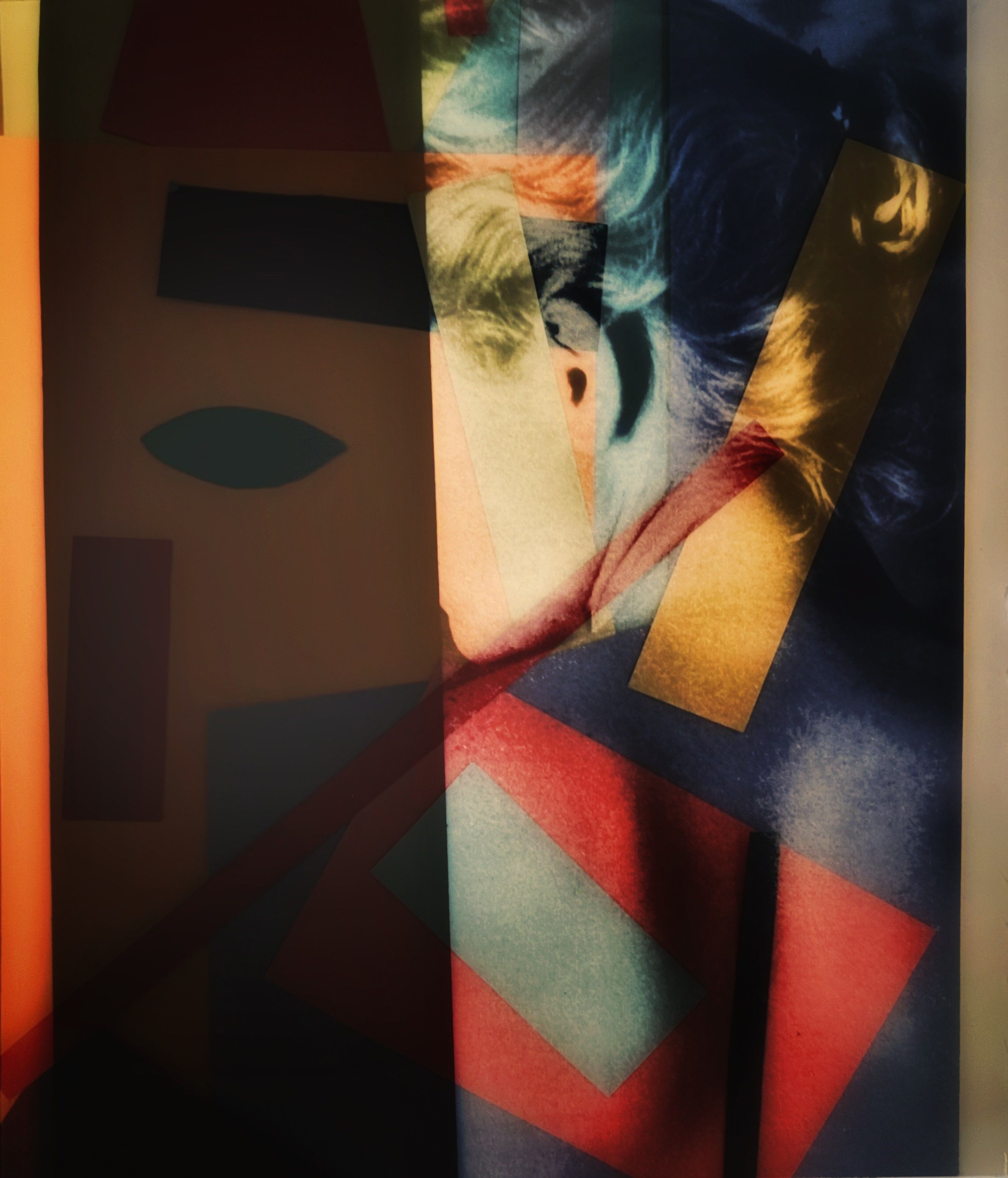
Image: “Femme éclairée par la lumière du carnaval – Woman lit by carnival light” by JC Alifer
JC Alfier is a poet and photo-artist whose aesthetics are informed by Yoko Mizuki, Francesca Woodman, and especially Katrien De Blauwer.



 Pine Hills Review