
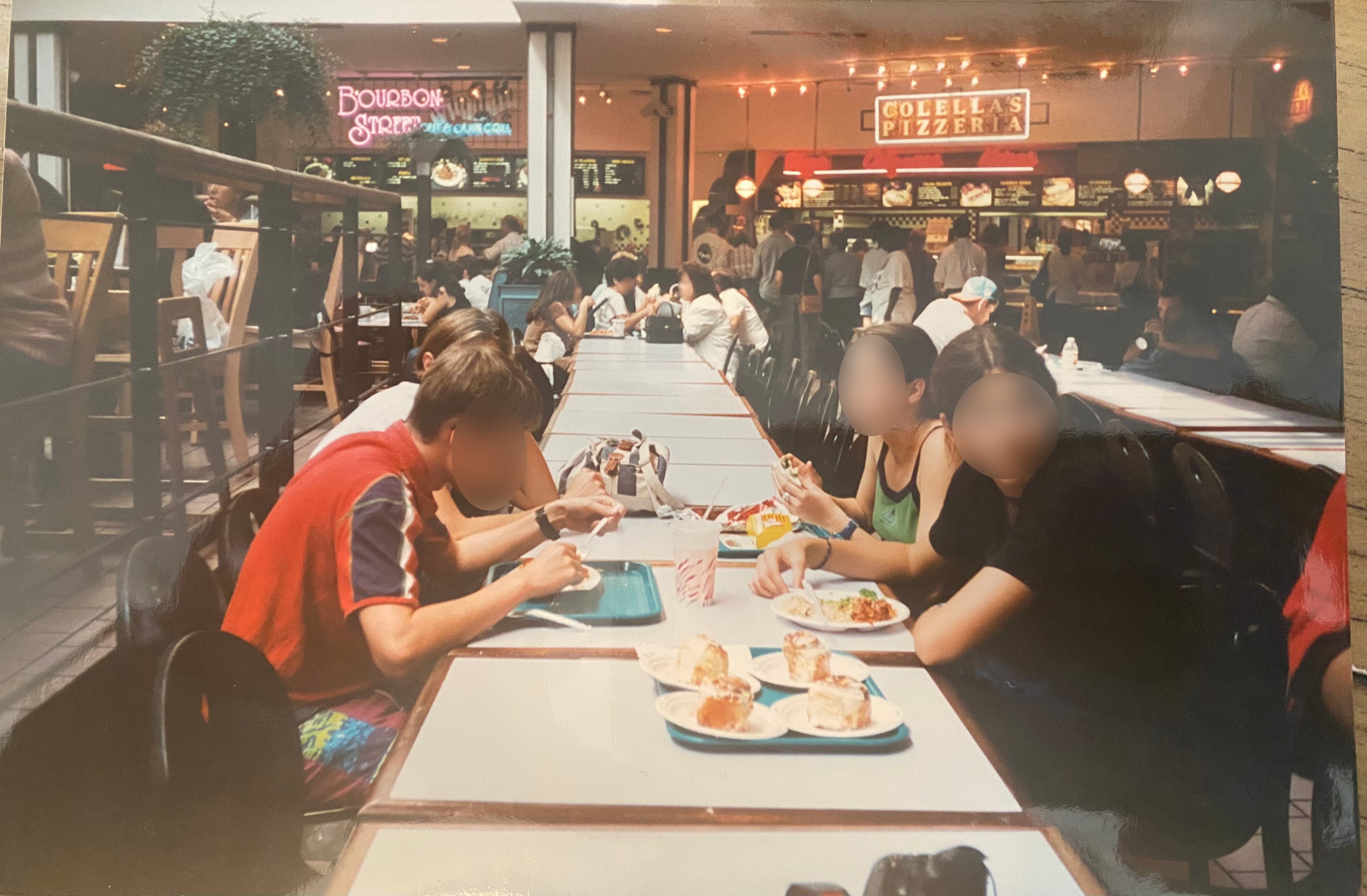
Friday nights were for walking the mall. We’d enter at the food court, hang a right toward Lord & Taylor, then head up the escalator to Hot Topic and Claire’s, running our hands over wide-leg jeans and logo tees and dangling feather earrings.
But really, we were looking for boys.
We were 17 at the time. Too young to get into the bars and dance clubs scattered about town. But what else was there to do, beyond watching B-horror movies in our parents’ basements, getting mozzarella sticks and disco fries at the diner, or passing the time at the mini golf course up the highway?
Besides, what we wanted more than anything else was to be seen. To be seen as more than what we’d always been. To be seen as women.
The mall was the place to be seen. Boys would travel the corridors in packs, just like us and, as we passed each other, they’d look meaningfully into our eyes, glance over their shoulders to smile back at us, lean into each other to whisper and laugh and gesture.
Sometimes, if the stars aligned, we’d see them again. By the Sunglasses Hut kiosk. On line at Wetzel’s Pretzels or Cinnabon. Sitting at the fountain, flicking pennies into the water.
These repeated encounters were assumed to be purposeful. The eye contact we exchanged grew more intense each time, would stretch out into small, smoldering eternities. The evening would become charged with possibility.
On the night one of those roving packs followed us all the way into Spencer Gifts, I decided to be brave. Amidst all the lava lamps and lingerie, the graphic tees and the keychains, the mugs with boobs on them and the “let’s fuck” dice games and the fart spray, I approached the boy I’d passed at least three times in the mall corridor—the one who’d smiled at me each time—and I asked him for his number.
I had never been the object of attention before, had never felt desired or desirable. With my flared jeans and my novelty tees and my quiet sarcasm, I was typically overlooked, especially when placed beside my friends, whose legs stretched long and lean out of their denim short-shorts, who laughed in worshipful deference at the boys who spoke to them.
To be so invisible at this time of my life was a kind of agony.
Would it always be this way?
Now, faced with the possibility that I was not, in fact, invisible, that I had finally achieved corporeal form, I found my nerve.
The boy’s friends punched his arm, egged him on, pushed him toward me.
Hope flapped its wings in my chest, flared hot against my skin.
Anxiety sat heavy in my gut.
Finally, he stepped up to me, chuckled, and shook his head. “I don’t think so,” he said, almost apologetically. And then he turned and walked away.
I died a thousand deaths as I stood there, cheeks aflame. Or maybe it’s more true that I wished for death to come for me, swift and liberatory. I did not yet know that this—this desperate, uncertain child, hungry for attention—was not who I was.
That I was still becoming.
That, someday, I would be seen.
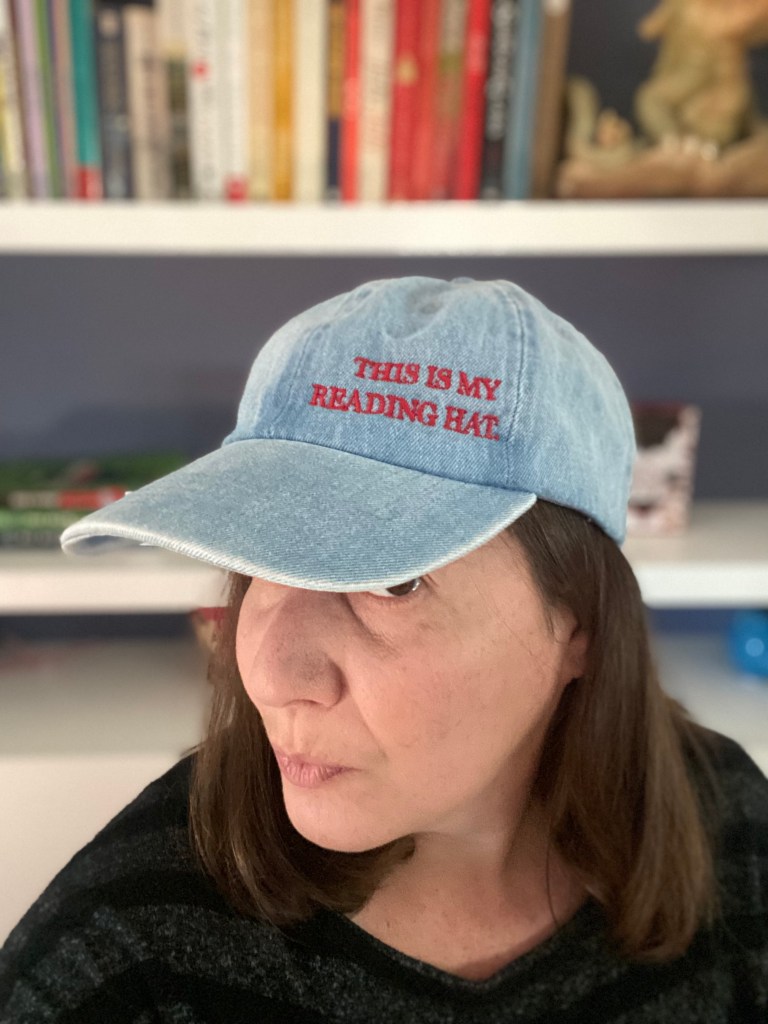
Steph Auteri’s work has appeared in Poets & Writers, Creative Nonfiction, Southwest Review, and elsewhere. Her work has twice been listed as notable by Best American. She is the author of A Dirty Word. And though Friday nights used to be earmarked for walking the mall, she now avoids going there at all, preferring instead to hit up thrift shops and mend her old jeggings.
Image: “Mating Ritual” by Steph Auteri

 Pine Hills Review