
Playing a character on stage requires you to straddle two realities. There’s the real world: you’re in a theater, drove here in a car, and have to get up at six the next morning for work. Simultaneously, you embody a secondary realm: one where you borrow the mind of another person, want what they want, and slip into their emergencies. My mom warned me early in my career that these two worlds can battle one another, a phenomenon she called, “The Curse of the Little Man.”
“The Little Man sits on your shoulder and tries to distract you,” she’d warn. After decades as an actor and a director, she knew from experience, and I trusted her word. “He’ll move your props and make you stutter and whisper ideas in your head that could ruin the play.” She explained that the Little Man once tempted her to walk off the stage and never return, right in the middle of a scene.
I was 12 years old when I first forgot a line on stage. That night, in a North Jersey chapel-turned-theatre that was infested with ladybugs, my mom was playing the character of my mom in a production of The Diary of Anne Frank. While I was supposed to be existing in 1940s Amsterdam, the Little Man reminded me that I had a take-home biology quiz due the next morning. Maybe I could finish it on the bus. Maybe I could get it done during lunch. Maybe I could take off tomorrow if I get home too late.
It was silent. It was silent on stage, and no one was speaking. One second, then another. Three seconds. Jesus, why isn’t anyone saying anything? The church rafters creaked. The legs of the ladybugs scattered. An audience member adjusted in a pew.
After an indeterminate amount of time, the Little Man released me, and I spat out my line as my mom gave me a what-the-fuck glance. She’d warned me about this.
“You’re good; it happens,” the girl playing Margot later told me.
But it didn’t happen, at least not to me. I went home and ignored my bio quiz, racing back to my script to hammer the lines into my mind.
Over 25 years later, I rode the M72 bus across Central Park toward Memorial Sloan Kettering Cancer Center. It was an orange day—my term for days that feel as if the world is crumbling into another smoldering crisis. Every image, sound, and smell morphed into memories the moment they settled in my mind, allowing me to absorb the day from the safety of an imaginary future.
“You be safe now,” the bus driver hollered to an elderly passenger exiting the bus. A kid with firetruck hair got on with her parents. She had a cough, but she ate a popsicle to soothe her throat. A blonde woman in front of me loudly discussed table linens for her wedding. She smelled like lilacs, like Glade Plugin lilacs.
Our bus passed through the 65th Street transverse and under the stone arches that connect the park. It was spring and the pods from the dogwoods fell like fat snowflakes. I closed my eyes and replayed a conversation from a week earlier.
“I just don’t understand why you haven’t called her,” my dad said right after my mom got a colon cancer diagnosis.
“Because—”
I paused and my vocal cords locked. I wanted to say, because I can’t let the Little Man win again.
“Because I’ve been busy,” I said instead.
A few days after that call, a text from my sister—who knows how to speak medical-ese—arrived on my phone. Anastomotic leak of the bowel resection. Sepsis. Low blood oxygen saturation event. Almost didn’t make it. My family had plenty of experience with these emergencies. After over a decade of my mom’s battle with alcoholism and two other run-ins with cancer, we knew how to shift into a more direct and clipped form of communication during hospital stays.
When the bus reached the end of the line on York Ave, I stepped into the sunny spring morning with a hoard of people headed toward the hospital. I moved through the arrival motions in a fog: security, a sticker name tag, an escalator to an elevator, and eventually, the ICU check-in desk. Outside of my mom’s room, a kind-eyed nurse named Jordannah taught me how to put on the extensive list of PPE.
“Throw it all away inside the room in that bin before you come out,” she instructed firmly.
The day turned a deeper orange when I walked into the room. Machines flashed and beeped, and the picture window filled the room with sterile light. Her eyes, topped with furrowed, enraged eyebrows watched me as I walked into the room. She waved her hands in a questioning motion.
“Do you want to write it down?” the other nurse yelled condescendingly.
My mom pointed with a sarcastic “you got it” look. Her hand loosely gripped the pen, and I braced the notebook on my hand.
The nurse pushed back again, “No script, Mary, you gotta print so we can read it.”
“Her cursive is better than her print,” I cut in, “She went to Catholic school.”
We watched my mom form the letters and give up several times to start over.
“How… long,” she wrote and pointed to the tube in her throat.
“When your lungs can breathe on their own again,” the nurse answered.
My mom rolled her eyes and slapped her hands down on the bed, sending the paper and pen flying. After five minutes, she started the process again, writing, “How long?” and waiting for an answer. We maneuvered through this loop for four hours.
I tried distracting and comforting her: rubbing the part of her hands that didn’t have tubes connected to them, brushing her hair, repositioning her pillows, encouraging her to sleep. The loop of questioning continued until my dad arrived to swap out with me.
Later in the cafeteria, I Googled “Post-operative delirium” as I mindlessly devoured a paper basket of chicken fingers. Delirium is common, the internet told me, but more common in those with a prior history of mental health struggles or heavy alcohol use.
Before I went on stage as Juliet each night, I paced between the apple and pear trees. My parents ran an outdoor Shakespeare company at a winery during my teens. A wooden stage, transformed into a palace in Italy, looked out over a sea of wine-drunk upstate New Yorkers.
If there’s one thing that Juliet does in that play, it’s talk. The depth of the role began to drown me, and the fear of ruining my mom’s artistic creation kept me from sleeping most nights. I ran my lines obsessively—three times at least—every night. The process took over an hour.
“Do you really do that every night?” A voice behind me asked as I whispered to myself. It was Gary, the six-foot tower of a man playing Romeo.
“I don’t know when this started, it’s just always been part of my pre-show ritual,” I explained.
“You know the lines, though, you just need to trust your brain.”
Trusting my brain was a foreign, naive concept—something that other people got to enjoy. The Little Man was everywhere, on stage and off. I used multiple practices to trick him. Checking, double-checking, and triple-checking my prop table. I wrote my props down in a notebook—a new handwritten list each night—and scratched them off manually when I held them in my hand.
My lines had the same emergency exits. If I lost this line, I’d jump to that one. If I got too far off track, I’d go to a line that started with specific letters. “Come, gentle night, come, loving, black-brow’d night.” I could always land there in my monologue if I needed to.
At the end of each show, I wondered if my mom saw my mind slipping as she watched from the shadows of the audience.
My family celebrated when the doctors moved my mom to the Step-Down Unit, the purgatory between the Recovery floor and the ICU. Still, the delirium clung to her. She was lucid on Mother’s Day and then disappeared again the next morning. Fearful confusion led to hallucinations. She told me I had a beautiful hat but that there were also green bugs hovering around my head. She reported that a man stood in the corner at night and watched her sleep.
“Can you get me some grapes out of the fridge?” she once asked me with urgency. She wasn’t allowed to eat because she had a tube down her nose that removed everything from her stomach. “They’re in the fridge,” she insisted. There was, of course, no fridge and no grapes.
The days cycled at a frenzied pace. When I’d leave the hospital at the end of visiting hours, my body hung on its bones from exhaustion, but I willed myself upright until the bus reached my block.
Mornings consisted of a close examination of her doctor’s daily report. I grasped onto any change as progress and began to convince myself that nothing else could go wrong after so much had already happened. And then one afternoon, a nurse walked into the room.
“You’re getting your own room, Mary!” she announced.
As the medical team prepped her bed, the nurse pulled me into the hallway and told me to stand aside and not touch anything. When she came back out, she looked glum.
“Your mom has MRSA. It’s a hard infection to treat since it’s often resistant to antibiotics. We will go back to robes, masks, and gloves and put her in a single room.” I planned to quarantine for the next two weeks due to the exposure. My mom’s fever escalated, and then she told me the nurses were trying to kill her.
A week later her delirium triggered a fight. She requested more pain meds before her arranged time, and I calmly reminded her it was too early. And yet, she continued to push. Perhaps she was convinced that I was in on the conspiracy—with the doctors—to kill her. Her rage only escalated.
“Your painkillers are on a schedule,” I told her, losing patience, “They can’t just give you more right now.”
She then looked me in the eye and threatened to start drinking again when she got out. By the tone of her voice, it was to punish me. My cheeks filled with red and years of concentrated rage at her drinking raced toward my twitching stomach. I considered throwing up. The nurses stared at me with worried looks and my hands began to tremble. She won’t remember this, I told myself, she’s not really here.
When she began to shout even louder, something in my mind misfired. The glue that had spent weeks holding my caretaker neurons together failed. I stormed from the room and rushed into the austere family waiting area. I couldn’t catch my breath, and I cried to the point of hyperventilation, leaning my hands on a bookshelf and pressing my head against the musty-scented wood.
The Little Man asked me what would happen if I walked out the door and just kept walking, maybe without a clear destination, maybe without telling anyone. The old intrusive thoughts felt warm and comforting, like a rush of whiskey hitting your legs. You don’t have to stay sane, the Little Man told me. Isn’t this all a bit too much? I knew I risked getting taken away from reality again and yet ignored—pushed through—the warnings, only to return right back to this state.
That evening, around 2 a.m., my phone rang enough times that it broke through the Do Not Disturb setting. The screen read, “Mom Cell.” I froze on the edge of my bed and didn’t know how to answer. The voicemails that followed are something I will never share. The doctor’s report depicted her screaming my name (“her daughter Ginny,” it read), and her eventually tearing out her IV and the vacuum-sealed wound covering across her abdomen. My husband put his hand on my back and sat up beside me.
“It’s time for you to finally rest,” he told me, and I put my phone back on the nightstand.
One of my last professional acting jobs required me to dress like a clown and travel around Florida to teach kids about playwriting. During each 30-minute assembly, I fought against the voice of a Little Man who was no longer little. He followed me to the tour van and back to the floor of my bedroom where I spent most evenings waiting for the time to pass. As I played with the ripped shag of the carpet, the Little Man helped me contemplate walking away from not just the stage but from the cycle of exhausting days themselves.
I began slipping into dreams that felt like hallucinations. I’d wake up out of bed, often standing in the middle of the living room with no memory of getting there. One night, I woke with all the seashells I’d collected on the Sarasota beaches squeezed between my hands, nearly breaking the skin on my palms.
I flew home with purple ditches under my eyes at the end of March. Home felt like the finish line of failure. I climbed into my childhood bed and didn’t come out for days, not to eat and barely to shower. I closed my eyes and heard the opening song of that show looping on repeat, reminding me that I wasn’t mentally strong enough to work in a career that toyed with reality.
After several days, the smell of pollen forced open my eyes. My mom had placed a vase of flowers on my nightstand.
“You need something life-affirming,” she told me with the voice of someone who knew what it was like to not get out of bed. We’d stopped working together after Romeo and Juliet and we hadn’t shared a stage in years. Misunderstandings at rehearsal led to terse, silent rides home in the car. My fear of ruining her vision eventually shattered my belief in the art. The Little Man, at last, came between us.
The unexpected happened. Even after stringing myself along with the hope that she’d get better, seeing the day arrive was no less shocking. It took months, but the MRSA relented, her other infections healed, and her wound began to close. She learned to walk, eat, and even sleep in her own bed without assistance. She no longer saw bugs flying around the room or the man standing in the corner. She didn’t remember the threats from the doctors, but she did know that the experience was horrific.
In July, we sat in the living room of my childhood home when she said, “You know, they told me I called people in the middle of the night.”
She didn’t remember, I realized, just as Jordannah had suspected. Was it worth telling her that I was one of the people she called? Did she remember the bugs, the grapes, the days with MRSA, or the endless hours of me trying to get her to eat again? Did it matter?
The Little Man may be an unavoidable feature of an actor’s life—perhaps a fee we pay for toying with reality. Or perhaps he is an inherited temptation to flip reality sideways and consider the alternative to sanity. No matter the answer, I now know I must do everything in my power to avoid future encounters, particularly in the places where his voice waits in the wings and echoes beyond reason.

Ginny Bartolone is a writer, long-distance hiker, and lapsed actress based in Manhattan. Recent essays and speculative fiction pieces have appeared in Salon, After Dinner Conversation, Waxing and Waning, and more. She also covers hiking the Camino de Santiago on her blog and in a memoir currently in progress.
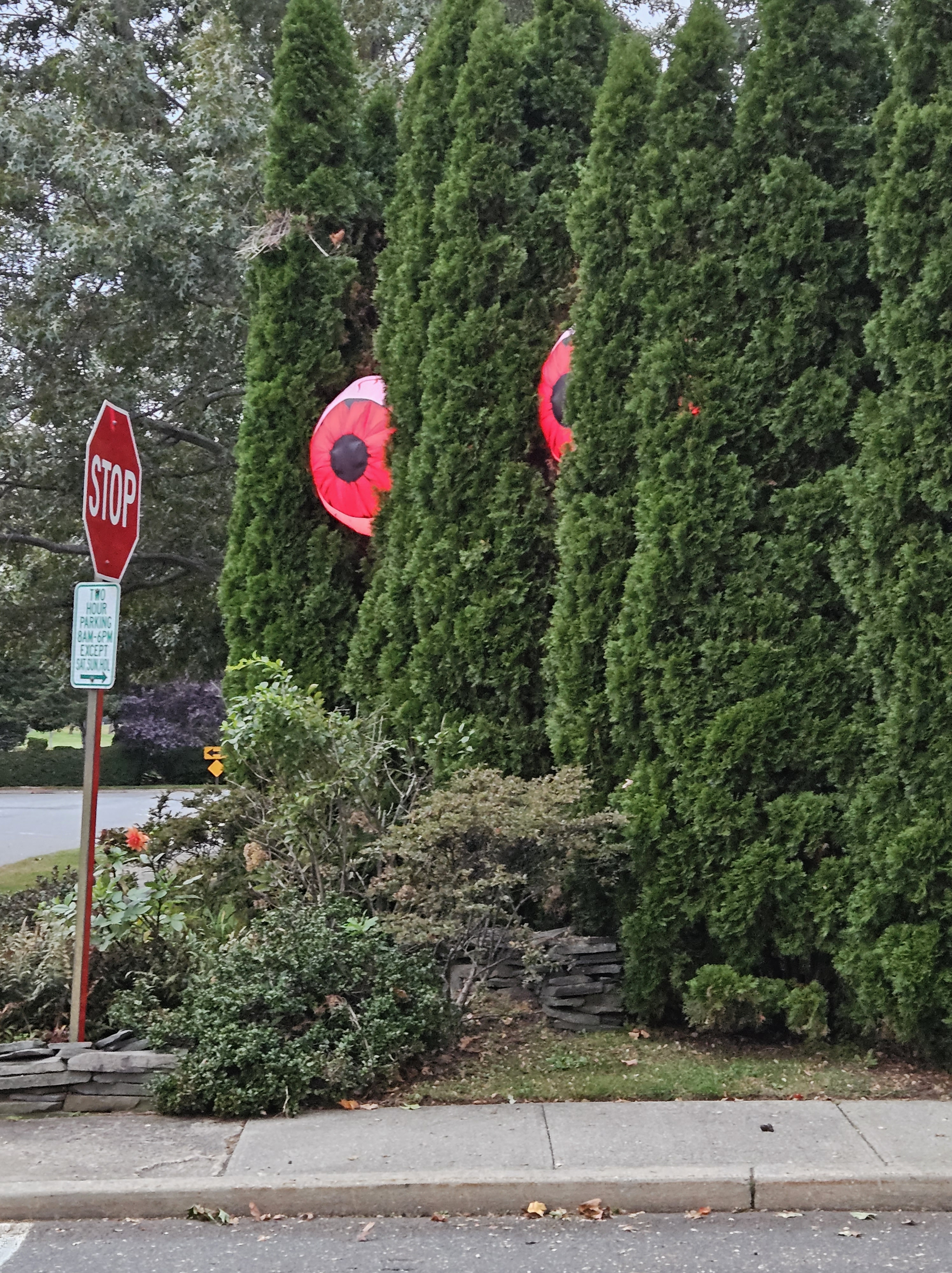
Image: “It’s in the trees, it’s coming!” by Alex J. Tunney



 Pine Hills Review