With my late twenties coming this year, I find myself reflecting on the early years: childhood, teenagedom, the shift through my young adulthood. The past and the future feel close and far away at the same time.
I spend time with my parents, watching them age, wondering how much time I have left with them. I see my younger siblings growing into confident adults, and creating families of their own. And I compare milestones and accomplishments with my friends, wondering if what I am doing is right, good enough, or on time. All of these impossible measurements of success as thirty lurks a little of three calendar years away.
I have taken time to reflect on all of this as I read Bernadette Geyer’s What Haunts Me (April Gloaming). Geyer’s newest poetry collection touches on topics of family history, lineage, grief, childhood experience, and adulthood with symbolism, freeze frames, and dabbling in the “successes” and “failures” of romanticism.
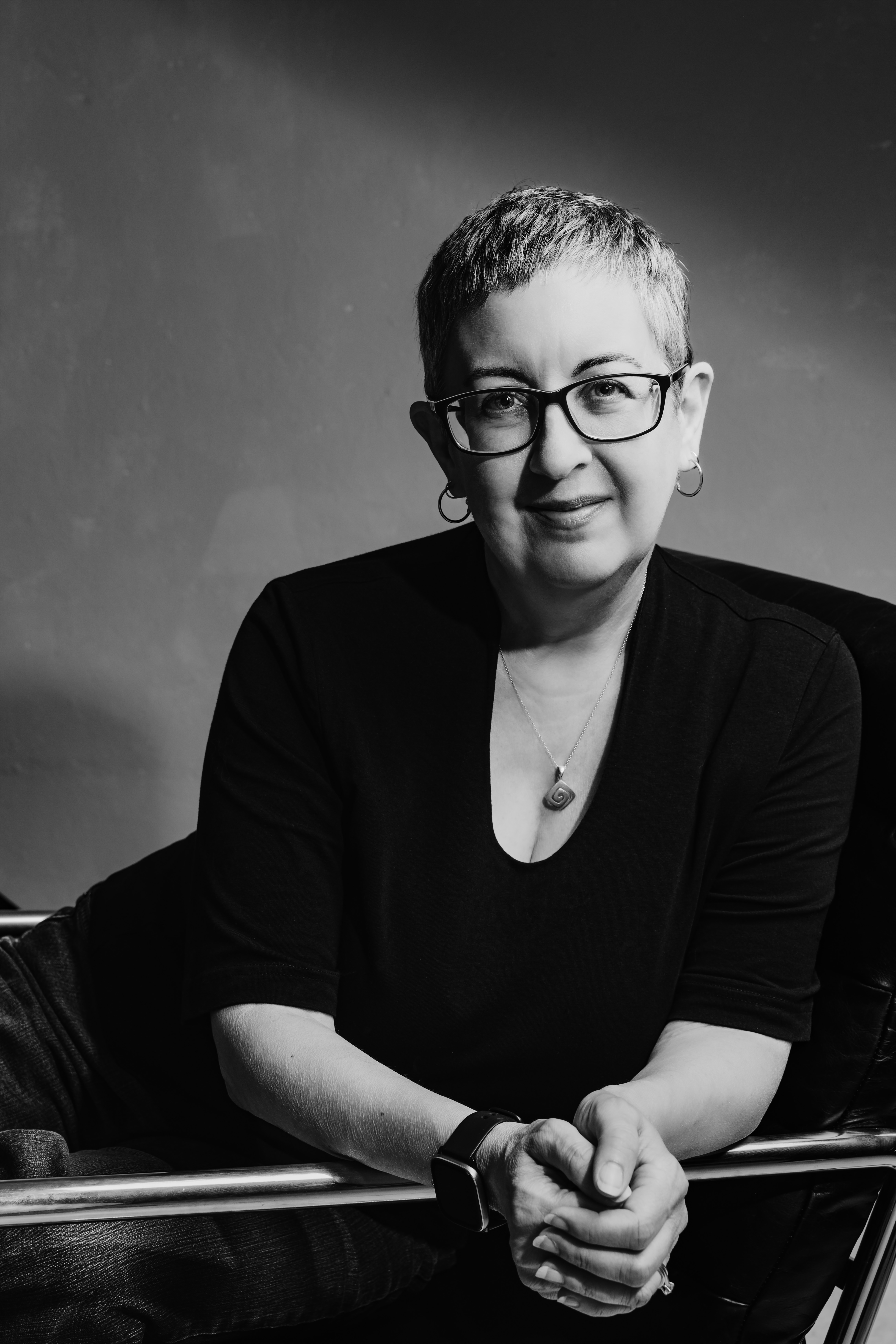
Bernadette Geyer is a writer of various genres. Her prose has appeared in AFAR Magazine, Border Crossing, Oh Reader, Slow Travel Berlin, Westerly, The Writer, and many more. Her poetry has appeared in 2015 Poet’s Market, Barrow Street, Bennington Review, Fourteen Hills, Poetry Ireland Review, Poet Lore, and elsewhere. The author of The Scabbard of Her Throat, her first full-length poetry collection, Geyer has also translated several German poets.
In this interview, conducted as 2025 turned into 2026, Bernadette Geyer and I discuss all things related to her new poetry collection from hauntings, her writing process, familial traits and lineage, Petra the swan, the reflection of mementos of childhood in adulthood, and future writing projects.
The first question that I find myself having to ask is one that I ask every single writer that I interview: Where are you emotionally, physically, mentally, or spiritually?
As the end of the year approaches, it feels like all kinds of loose ends in my life need to be tied up, and I know I’m running out of time. The end of the year always has this exhausting effect on me. I feel like I have to do ALL THE THINGS! I’m a big believer in the importance of taking vitamins, so I have my D, C, B12, and Iron stocked up. Whenever I start feeling tired or emotionally out of sorts, it’s usually because I’ve neglected my vitamin intake for a few days. I kind of look forward to January, when the craziness of the holidays is over but the weather sucks, it’s dark all the time, and I don’t really want to be outside – nor do I feel any pressure to be out and about. That’s my hygge time.
Your most recent collection of poetry, What Haunts Me, spans history, family lineage and tradition, anticipatory grief, your own life experiences as a child in a town consumed by steel plants to an adult who has traveled extensively through Europe. What haunted you, if anything, through this writing process? How did you choose which hauntings to write about, and what haunts you currently?
The poems in What Haunts Me were written over the course of around 20 years, so I had quite a bit of time to really consider the things that do haunt me, as compared to things that are just minor irritations that are forgotten hours or days later. The manuscript originally began as a meditation on what is remembered and what is forgotten. Only a few of the poems from that original manuscript have lasted through to the published book.
Eventually, the core themes broadened into what is passed down, what we leave behind, what we carry with us throughout our lives, and why. Growing up in a house that I believed to be haunted was of course something I had to write about, and all those poems made it into the final book.
Currently, I am haunted by the idea of waiting. We spend a lot of our lives waiting. So I’ve been delving into all these situations in which I have waited and exploring those in poems.
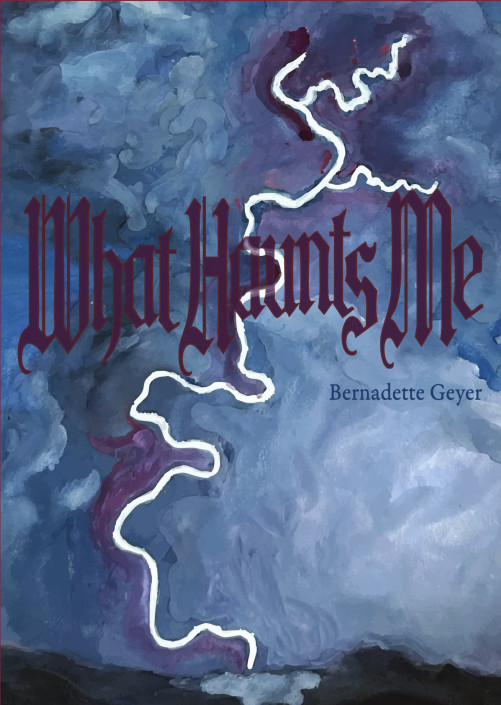
The first thing that intrigued me, other than the drawn lightning bolt on the cover of the book, was the setup of your poetry collection. Five section breaks are separated by a white page with a simple asterisk. Was there a hidden meaning/purpose behind this? How did you find yourself organizing the poems in your collection before publication?
I feel like the section breaks allow for a little breathing space between the core themes of the book. Over the manuscript’s many iterations, sections were organized differently, which I think was a reason that it did not find a publisher until now. I had to completely start over in grouping poems to find the right combination.
The first section is very much family- and ancestry-focused, looking at the people close to me that have been influential in who I am today. The second section contains poems that center on physical spaces and environments.
I can’t emphasize enough how important surroundings are to the shaping of identity. Section three looks at people outside of my family who simply stood out throughout my life so far and gave me reason to think. There is a strong thread that links many of these poems, and that is the idea of how we come to find our callings to work, our vocations, and the artistry we bring to the everyday tasks of our occupations.
In the fourth section, I gathered the poems that directly addressed death and the burdens – both physical and spiritual – left to the living. Finally, the last section is unified by its focus on the importance of names and memory, with one last parting shot at the ghost of my childhood bedroom and the burdens that I now understand I – wittingly or unwittingly – pass on to my own daughter.
While reading “Sometimes I Damn These Hands,” a poem where you talk about familiarity, lineage, and passing traits/ work ethic down, I couldn’t help but reflect on the things that I have kind of “inherited” from my own parents–their work ethic, their facial expressions, and figures of speech. Was this the intention behind the poem? Do you think these traits, like the gardening you mention, are inherited from our loved ones in their own right?
You’ve hit the nail on the head with this. That is absolutely the intention behind this poem. My love of gardening comes directly from my parents, and from my mother’s parents. I have never known life without a garden, without fresh vegetables picked in the morning and set out on the dinner table in summer. Jars of peppers lining the walls of the old coal cellar of my parents’ house.
And I can see and hear my and my husband’s gestures and figures of speech that our daughter has picked up from us – and vice versa. Inheritance is a two-way street.
In “Portrait of My Father Looking for Four-Leaf Clovers,” the reader sees your father, a man used to hard work and little free time, looking for four-leaf clovers in a field in Pevensey, England. There is a sort of anticipatory grief established here in this poem that lingers throughout the collection. I see this sort of tactic being used as a “freeze frame” of this time to make a portrait of your father. How do you see this? Can you elaborate on the writing process of this poem? Was this sort of “freeze frame” your intention while writing this piece?
The foundational images of this specific poem were written not really as a “freeze frame” but more of a study of my father outside of his normal life and routine. It was fascinating to me to see how my parents reacted their first time overseas. I was most struck by their reactions to finding things that were familiar – the wild raspberries, the birds, the clovers – just in a different country. It was only after his heart attack that the poem really found its way toward this sense of anticipatory grief you mention. After a major health event like this happens, it puts a filter over all the memories of times that came before it. It turns certain memories into foreshadowing events.
I see that you speak of fish at different times throughout your collection. The first time we see the introduction of fish is in the collection’s poem, “Kinship,” when you write about koi fish, again in your poem “Pond” when discussing goldfish and bringing them in for the winter, and then in “Acrostic: Dolores” to express giving birth. Are fish meant to symbolize one thing here? Am I possibly looking too into this repetition to find some sort of pattern?
I had not really meant the fish to symbolize anything specific, and it’s interesting to me that you point out this repetition, which I never really noticed! But, perhaps the fish do represent a subconscious harkening to the primordial soup and to our eternal need to observe fish – either in their natural habitat or within some man-made confines like a backyard pond or public aquarium.
I had never heard of the story of Petra the swan in your poem “Whatever Saves Us Is Sacred.” The swan fell in love with something that couldn’t love her back, but it was more than enough for her. This poem is so wholesome but sad. How does it connect to the rest of your poems?
For me, the key link for this poem is its handling of lineage and family ties. How do we respond to the societal pressures to either carry on a family name or change it, to reproduce or to not reproduce? Petra’s love for the swan paddle boat confronts these questions. I, too, initially found it to be a sad story, but maybe it was not so sad for Petra? Maybe what the swan paddle boat provided for her was all that she really needed. The longer I thought about her story, the more I choose to see it in a positive and empowering light.
“Failed Romanticism” had me looking for everything related to Romanticism. I loved the inclusion of this poem, the explanations of scene, place, nature, persons, but most of all, I absolutely loved the line, “Nothing that lives so long can expect to retain a single identity.” I think that is so true for us all. We are so many things and have been so many things, all of those identities adding up to who we are. Touching on all topics of romanticism, how is this “failed?” Where are we lacking the essence of Romanticism?
The term “ruin porn” comes to mind when I consider the origins of this poem – this draw of some photographers to find and capture images of abandoned spaces in the world. It’s a romanticization of these deteriorating buildings and complexes. There are many coffee table books on the subject, and we have one of them ourselves (Beauty in Decay, published by Carpet Bombing Culture). When I found out about the intentional preservation of Angkor Wat in this state of near-abandonment, it led to my thinking about why some ruins are preserved – I think of all the ones I’ve visited in England – and why some are not. Why do we romanticize the crumbling remains of some buildings, but not others? And then I brought this into my consideration of the ancient places I have stayed in, versus my own home. At the time, my husband and I were going through many renovations of our split level to weather-proof and pest-proof it. What did I put up with elsewhere that I would not put up with in our house? That’s why my romanticism about ruins ultimately fails. I cannot bring this acceptance into the spaces of my own life.
The vastness of identity is something that I think rings true throughout this collection. Not only are you a mother, daughter, sister, wife, but you are a writer and a traveler. You are a craft of your experiences, lineage, identity, and self-proclaimed titles. Throughout the collection, the reader sees your childhood experiences, those of your travel, experiencing grief with your daughter over a lost family pet, and then as an adult reflecting back on mementos and artifacts of childhood. What is it that this book is meant to portray to the reader? Do you think it is our responsibility to hold onto all of these identities or learn when to let them go?
I think the more interesting question to me is how we come to these decisions of what we hold on to and what we let go as we move throughout our lives. There are some parts of past identities of mine that are painful, but the mistakes I made in those times helped me grow into the person I am now. As with all experiences in life – positive, negative, or neutral – I think I constantly have to remind myself to look for the takeaway. What is it that I am meant to come away with in this situation? What is it teaching me? However, because I find it hard to let some things go, I find myself taking different things away from those situations each time I look back.
For example, I had to learn to forgive myself for my reactions toward a friend in a specific situation, because years later, I realized that I was being gaslighted by that friend. Then, later on, I had to look back again and forgive myself for being gaslighted. But those poems are for the next book.
With What Haunts Me, I think I just want readers to see the beauty in the complexity of living and the process of questioning. Even if we never fix on an answer, it is important to continue questioning who we are and how we got here.
In the final poem, “Ghost, I Remember,” you confront a lingering ghost, an uncertain haunting at the end of the collection, as you visit what I presume is your childhood home. This poem cycles back to the last line of the first poem in your collection, “Kinship,” which reads, “My ancestors are ghost javelins—their lithe bodies a promise.”
Was this cycle intentional? Is it your ancestors who are haunting you in your final poem as well?
The final poem was not intended to evoke a tie to my ancestors, and I had not really thought of it as being linked to that first poem, though this is an intriguing observation. In this final poem, I’m ultimately confronting that ghost of my childhood and telling them they don’t scare me anymore. Because life, adulthood, and especially parenthood, with all its responsibilities, is far more terrifying at times than a ghost changing my clocks and pacing around my room at night ever was. That was simply annoying, compared to having to teach a child about death and illness and how our bodies – and others – can betray us.
Are there any new projects that you are working on that you want to tell us about? What is next for you and your writing journey?
I’ve been going through a very productive period in my writing over the past several years. I have another full-length manuscript of poems that needs to be finessed into its proper order before I start sending it out to publishers. Then I have a new series of poems on the topic of waiting, which I’ve been having fun with. On top of those, I’ve been writing essays and short stories.
I’ve just enjoyed letting the topic tell me what kind of writing it wants to be, instead of forcing everything to be a poem, which I did for a very long time.
This interview has been edited for length and clarity.

Samantha Zimmerman is an editor of Pine Hills Review and is an all-over-the-place poet with a passion for all things experimental and confessional. Her work has been featured in Sledgehammer Lit, Bullshit Lit, Discretionary Love Magazine, BarBarLit, and The Afterpast Review. You can keep up with her on Twitter @samthezim.
 Pine Hills Review