
The first thing I noticed about him was his bleached hair, the way it clung to the base of his neck and almost touched his shoulders. It was fraying at the end and looked only half-brushed. And although my hair was flecked with salt and tied in a messy bun and was less than half-brushed, his hair seemed more unruly than mine—the sort that hands, when run through, would snag on. His eyes caught my hair too—most people’s did. It was the feature that people first identified with me, the feature they knew me by.
I watched his eyes scan the space just above my head, to the half-wet bun held together with one hair tie and straining against its elastic confines. At this moment my hair wasn’t identifiable by its volume, by the space it took up, but by the fact that it differed from the hair of the women around me. Most of the women in line had styled their hair—braiding it to keep it out of their faces or had their hair twisted into claw clips, most of which matched their swimsuits or tasteful coverups. My hair looked like a feral animal angrily confined to a knot on the top of my head and my old athletic shorts and denim shirt were faded, covered in salt stains from earlier that day, and there were stripes of dirt from a hike smeared across the insides of my calves. I watched him take in my appearance, the way that I looked windblown and messy. And he kept his eyes on my hair as he handed the women in front of me their wetsuits out of the back of the van.
When it was my turn to be fitted for a wetsuit, he scanned my body from top to toe, eyes catching on my hips and chest. Appraising, but not sexualizing. He was taking stock of my curves, the way my body folded into itself, and I was trying not to notice his careful attention. I was trying to pretend like this is something I do often, standing in a parking lot in a bikini and Chacos covered in old salt, waiting to be handed a wetsuit while a man I just met looks me over from his perch in the back of a van.
I am not one who wants to have her body looked at, seen. Not because I am ashamed of the way my body looks, but because so often the gaze my body has been afforded has been male and overtly sexual. But in this parking lot, his eyes on my body bothered me precisely because they weren’t sexualizing. I wasn’t used to this sort of look—hadn’t practiced my response to it. I wasn’t used to being seen by a stranger. He wanted to make sure that my wetsuit was well-fitted and wouldn’t choke or balloon around my neck. It didn’t matter if my abs had lost some definition over the past few months. It didn’t matter that I hadn’t shaved in a week and the dirt had darkened my leg hair. My aesthetic didn’t matter, only my physicality and the objective shape of my being. At least that’s what I told myself.
I shucked the denim overshirt and old striped shorts in the loading zone of the parking lot and pulled the wetsuit on. The woman who had been in front of my mom, sister, and me in line was talking to us about how she’d been out on this excursion before and putting the wetsuit on was the scariest part.
The van man asked, concerned, “Is it a claustrophobic thing for you?”
“No, it’s just—”
“I get it,” my mom answered.
“You see everything,” the woman said, nodding.
I tried not to shake my head and I felt him watching me. I knew I was not above this conversation—I cared about my appearance more than my hair and muddy legs might seem to let on. I cared enough to pretend not to care. And I cared that I had earned this hair and dirt, that these were markers that I had used my body today. That they served as some sort of evidence that I had acknowledged my body’s capabilities and so other people could now do the same.
This was one of the first things I noticed about other people too—how they might use their bodies. A different sort of body language. I have always wanted to know what the deeper story is behind someone’s scars, the way they hold their shoulders, where they carry their tension, the bow of their knees.
Thus, the second thing I noticed about our wetsuit supplier was his bleached leg hair—nearly translucent against the deep tan of his calves and thighs—but this, unlike his windswept mop, was done by the sun. He worked on a boat, shuttling tourists out into the ocean; it made sense that he was used to being outside and his body showed it, but still I took this fact in and filed it away as if it gave me access to more of this man, of who he was.
His legs, like mine, were covered in bruises and small abrasions. His body was taut, but not aggressively so. He was the sort of muscled and bruised that comes with pushing your body, but not in a gym. His was a sort of wild strength—not strived for but happened upon through necessity. He was strong because the things he loved doing required him to be.
And as I sat on the net of the catamaran and he stood next to me, readying himself to explain the rules—what to touch and not touch, what to do and not do—I noticed the tape he’d wound across his foot and around his big toe. Sprained, most likely, and wrenched back into the correct position by electrical tape. I supposed that he was not going to be inconvenienced by this. He was here after all and his body, like mine, bore the marks of being well-used. This didn’t seem like the first time he was doing something not directly medically advisable. The small, jagged marks of scars along his shins suggested that stitches, and perhaps doctors in general, were not his go to route of treatment; that this wasn’t the first time tape had been ruled “good enough.”
He caught my glance at his taped toe and, with a smile, said, “It’s nothing.”
I nodded.
He handed out snorkels to those of us who hadn’t brought our own and I settled it against my face, my hair getting caught in the straps. I felt him watching me, waiting to see if I would need help to untangle the straps from the strands. I fixed it and pushed the goggles to the top of my head as I watched two women re-braid their hair out of the way. I jammed the pieces that had come loose from my bun back through the elastic and he started telling us our instructions for the evening: do not touch the mantas, do not let go of the raft, and do not pee in the wetsuits.
He was good at his job, offering quips and seriousness in equal measure. And I did what I always do: paid attention.
In seventh grade, my social studies teacher mentioned this careful attention to my mom, telling her that it was clear I was present in her classroom, but she didn’t understand why I wasn’t participating, why I wouldn’t talk, offer an opinion. I remember asking my mom how my teacher knew that I was listening, and my mom laughed and said, “It’s you. You’re always paying attention.”
On the boat, it was no different. I was maintaining eye contact, nodding along, and doing what I always do—trying to make sure that whoever was speaking knew that at least someone was working to retain the information they were offering. He noticed my attention and returned the eye contact. Other people were taking pictures of the sunset, but I, the student still aiming to be a “pleasure to have in class,” was watching him.
We reached the harbor where the mantas were supposed to be and anchored. I slipped the goggles over my eyes and the snorkel into my mouth. He nodded at me as I got into the water and swam out to the raft.
I stretched my arms out the way we were told to, the pool noodle was slid under my ankles, and I sidled down next to my sister. She was already in the water, positioned, and watching.
The lights under the raft were attracting plankton and within a few minutes, a manta ray was swimming below us. Within another minute, she came, mouth open, up towards the lights, directly between my sister and me, before barrel rolling away. I watched her slip through the water and tried to count the spots on her belly—the mottled brown patches that make one manta unique from another. The traits you can know them by. It felt like a futile inkblot test, but it felt important to me, this sort of bodily cartography—no matter how inept I was at it. It felt like a way of cataloguing this manta, this experience, and my presence here all at the same time. A way to make sure my mind was with the mantas.
I floated, hands wrapped tight around the raft, trying to make my body one with the surface. That was one of our rules, to keep ourselves from touching the mantas and not to, under any circumstances, reach out to touch them. But what they didn’t cover was what to do when they reached out to you.
When the third or fourth manta did a barrel roll underneath the lights, her pectoral fin touched my right arm and stomach, the soft slime of her protective mucus layer was now shared. The first manta returned, and she touched me too, even as I tried to wrench my elbows out of the water. She was, as we had been promised, “within licking distance.” I held her eye as she swam past, floating upside-down in the water, graceful and sure of herself. She watched me too. I was shocked by the gentleness of her eye, the soft, almost amber color, and her entirely unhurried presence. I expected something else, a darker eye or a colder look. She was here to eat and leave. My body mattered to her only in that I was not a threat. I saw the scars on her underside as our guide told us that she had been caught in fishing line and some of it had paralyzed one of her cephalic fins. She was harmed but unfazed. She rolled over and moved into the depths. I kept looking for her.
It wasn’t until later that I realized, I hadn’t tried to count her spots.
We stayed like this, us and the mantas, for two hours. We had entered the water just before sunset, and when my snorkel was bumped loose, I raised my head to discover that it was long past. There were no streaks of color in the sky, no soft blue slipping from the western horizon, only darkness and mantas.
It is rare for me to be this attentive. I might listen, nod, and acknowledge a speaker, but there is nearly always a whirr in the back of my mind—thoughts of something else that I should be doing. Any semblance of calm, of composure, is always in part a performance.
Yet, in that water, with nothing but the soft gurgling of ocean water and the snorkel-muted exclamations of those around me, I was present, both mentally and physically. I was present and focused until it was time to head back.
Leaving the raft, my body, cold and stiff, was tingling. This numbness was ocean-born and my body felt like mine. It was mine. I wasn’t ignoring the stiffness in my arms, or the feeling of icy water running down the back of my neck. I wasn’t performing, pretending, or dissociating. I was simply existing. This, I thought, might be why people meditate.
As I climbed the steps of the catamaran, I unzipped my wetsuit and let it fall around my hips—the way I’d seen surfers do it in the past few days—forgetting that anyone would possibly be watching, but someone was. I looked up, as I grabbed a towel and our wetsuit supplier asked, “You done this before?”
“No,” I said, unclear if he was talking about wearing a wetsuit or swimming with the mantas. Regardless the answer was the same.
“What did you think?”
“I think that’s a top ten lifetime experience.”
“It’s pretty amazing.”
“It feels like I shouldn’t be allowed to witness something like that.”
He smiled and nodded. He knew what I meant. He did this every day.
I ran my hand over my hair and grabbed a chunk that the ocean had wrenched free and tucked it back into the bun and he watched, gesturing to the bar behind him as a way of asking if I wanted anything. I shook my head. He nodded back at me and watched as I pulled the wetsuit from my body and went to stand by the railing in a towel skirt. After the mantas, his eyes felt heavy. Uneven. Abrasive.
I moved to the rail of the catamaran, stomach and elbows pressed against the guard rail and looked out at the darkness, straining my eyes to see if I could see beyond the boat’s lights. To see if I could still see the mantas from this vantage point. I couldn’t. But that didn’t matter. From here, on the boat, seeing them would have felt unfair. I closed my eyes; it wouldn’t have been a quiet, reciprocal witnessing. It would have lost its softness.
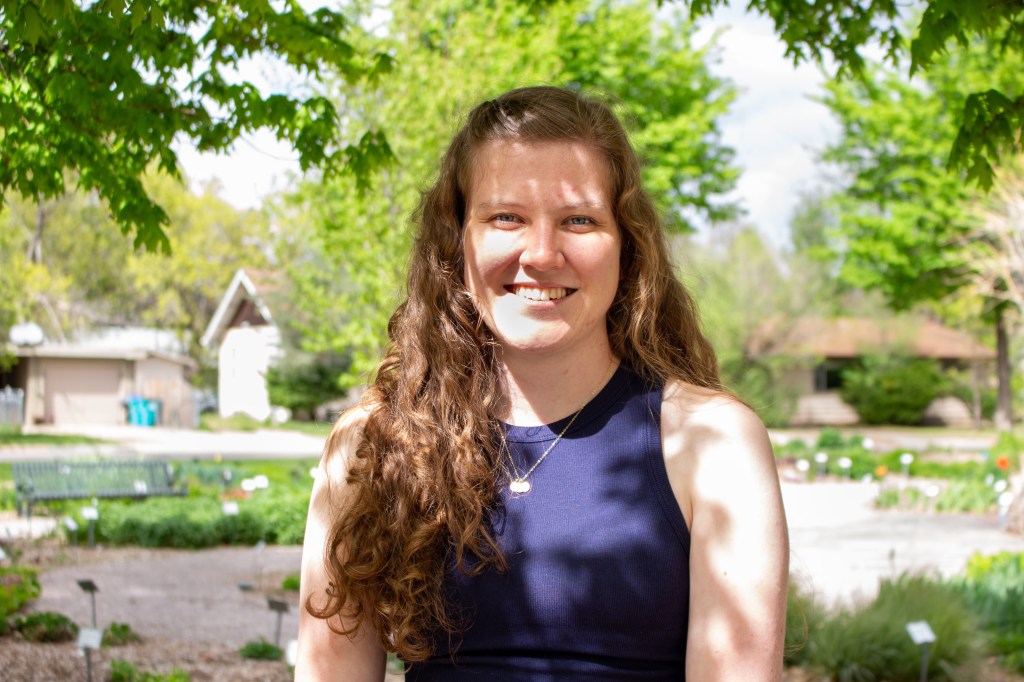
Anna Emerson (she/her) is a writer, literacy teacher, and Midwesterner who currently lives in Fort Collins, Colorado. She holds an M.F.A. in creative nonfiction from Colorado State University and is working on a memoir about grief, water, family, and her love of a good rock.
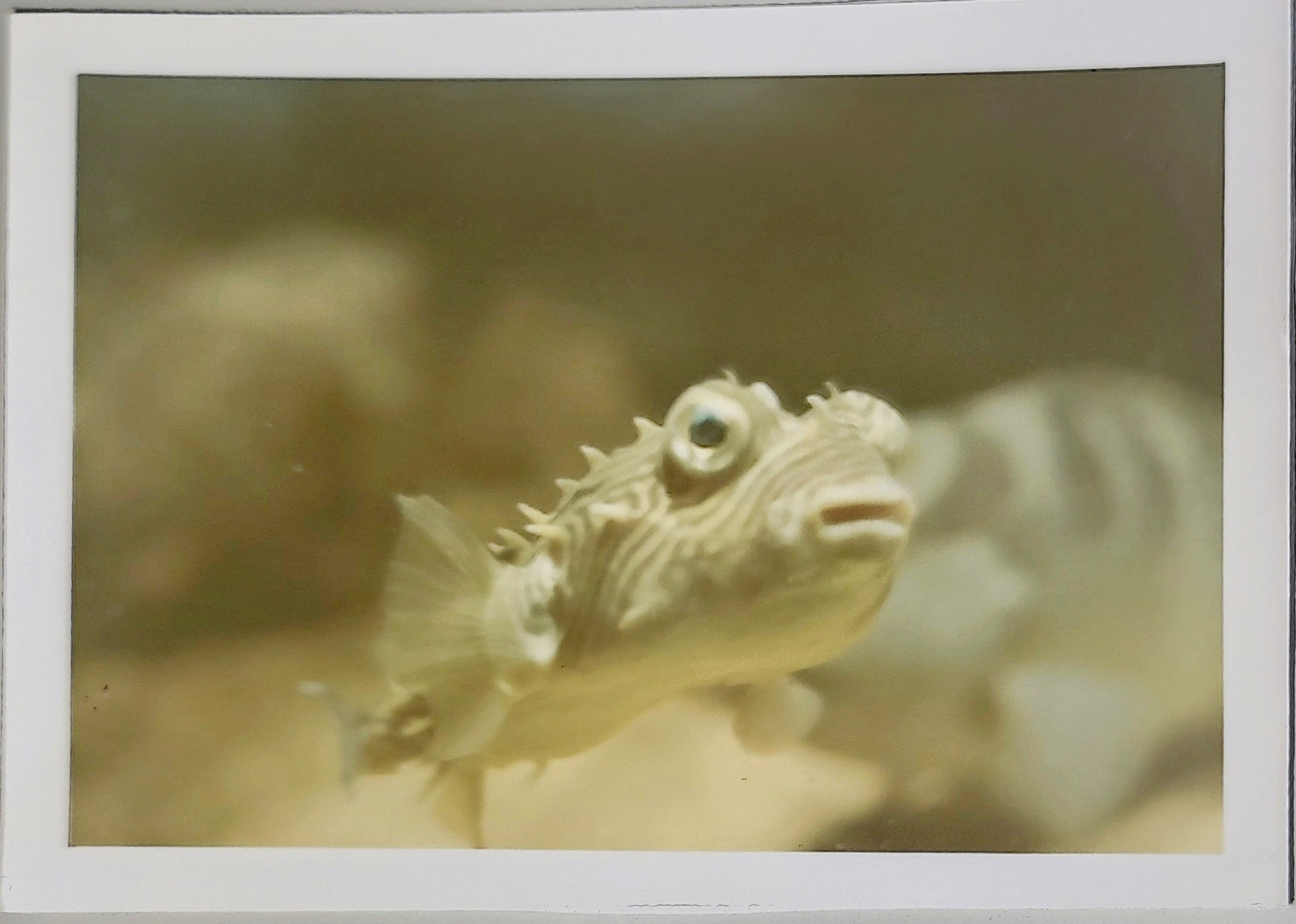
Image: “What You Know About Me” from The Dollar Store Estate Sale
 Pine Hills Review